Nutrient density is the top food trend for 2027, according to Innova Market Insights. Shoppers want more nutritional value from everyday food, and 59% globally say they read all or most of the nutrition information on the package.
Where that attention goes is telling. Innova found shoppers focus on sugar, protein, and fat. In the US, 51% of Americans check the Nutrition Facts panel to decide whether a food is healthy (IFIC, 2026), and they pay more attention to labels than they did five years ago (NSF, 2025).
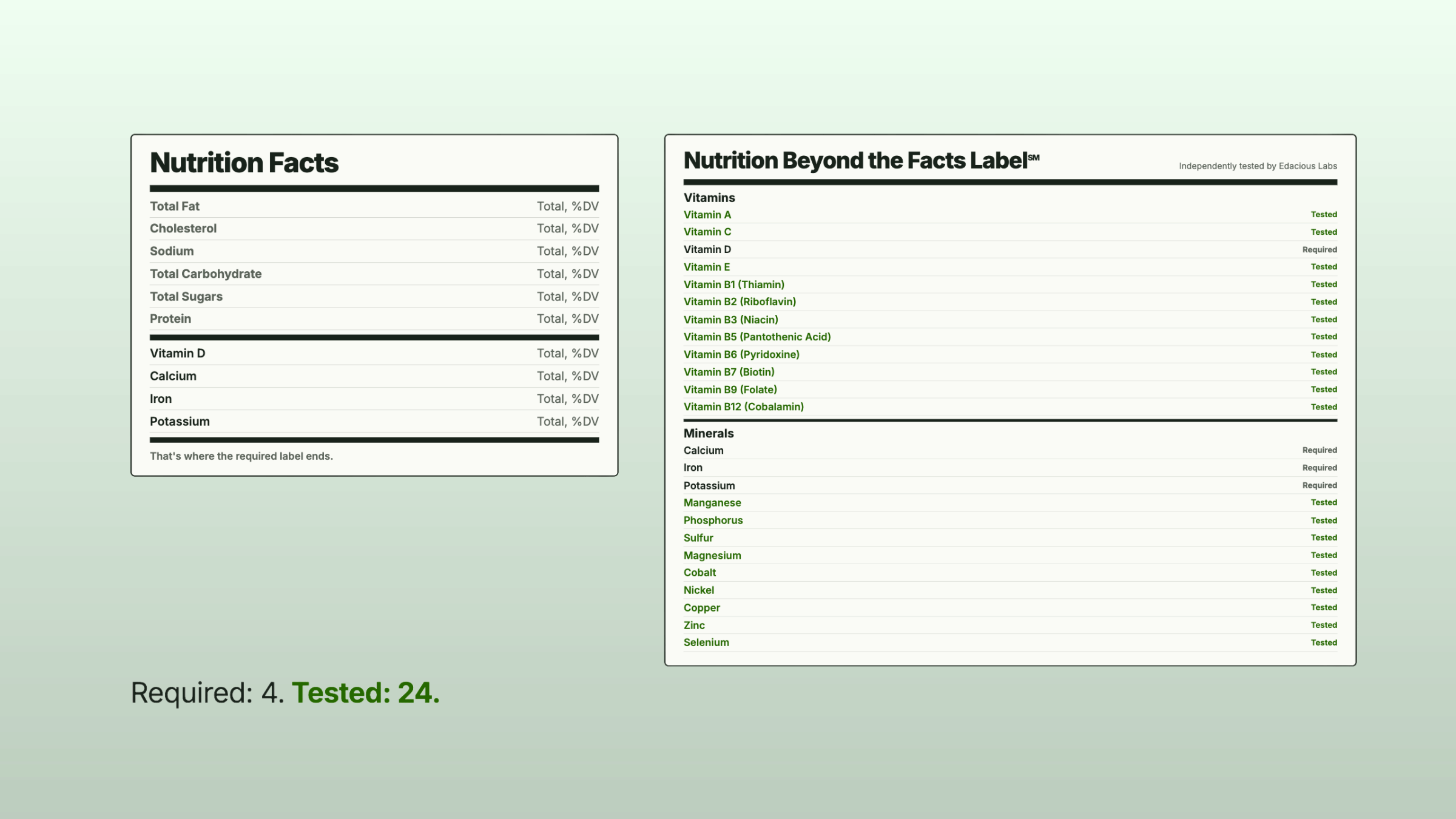
The challenge? The label they are reading is built around a short list of nutrients, almost always derived from a database and formula calculations, not primary data from having that actual product tested. More over, while the FDA sets a daily value for more than two dozen vitamins and minerals,the Nutrition Facts panel only requires four: vitamin D, calcium, iron, and potassium. That leaves up to 23 vitamins and minerals off the label of most foods.
That gap shapes the story of food quality. Shoppers ask a real question at the shelf, but the label answers it with only part of the story.
Why are most vitamins and minerals missing from food labels?
Most vitamins and minerals are missing from food labels because FDA requires only four and makes the rest optional. Those four were chosen for a reason. FDA added vitamin D and potassium in 2016 because Americans don't always get enough of them. Calcium and iron stayed on the list for the same reason.
Everything else is optional and often comes down to if a product has added a vitamin or mineral (think enriched flour) or the package makes a claim about it (think carrots with a “good source of Vitamin A” callout). Some of the foods with the most micronutrient value may carry no panel at all, as nutrition labeling for raw produce and fish is voluntary.
The result is a void. When a brand defaults to a standard NFP and label generator and does not test its own food, most of its vitamins and minerals stay unknown to the brand and to the shopper.
Brands that test and publish their results go beyond the requirements. Lab-backed Nutrition Facts labels start from a brand's own analysis and can include nutrients beyond the required four. Shoppers get a fuller picture of what they are buying, and a reason to trust it.
What vitamins and minerals do whole foods carry beyond the label?
Testing shows salmon, ground beef, and bok choy are rich in vitamins and minerals their labels rarely list. The figures below come from our Edacious FoodData pages and are %DV per serving. The 10% and 20% lines are FDA's thresholds for "good source" and "rich in" claims.
Salmon vitamins and minerals beyond vitamin D
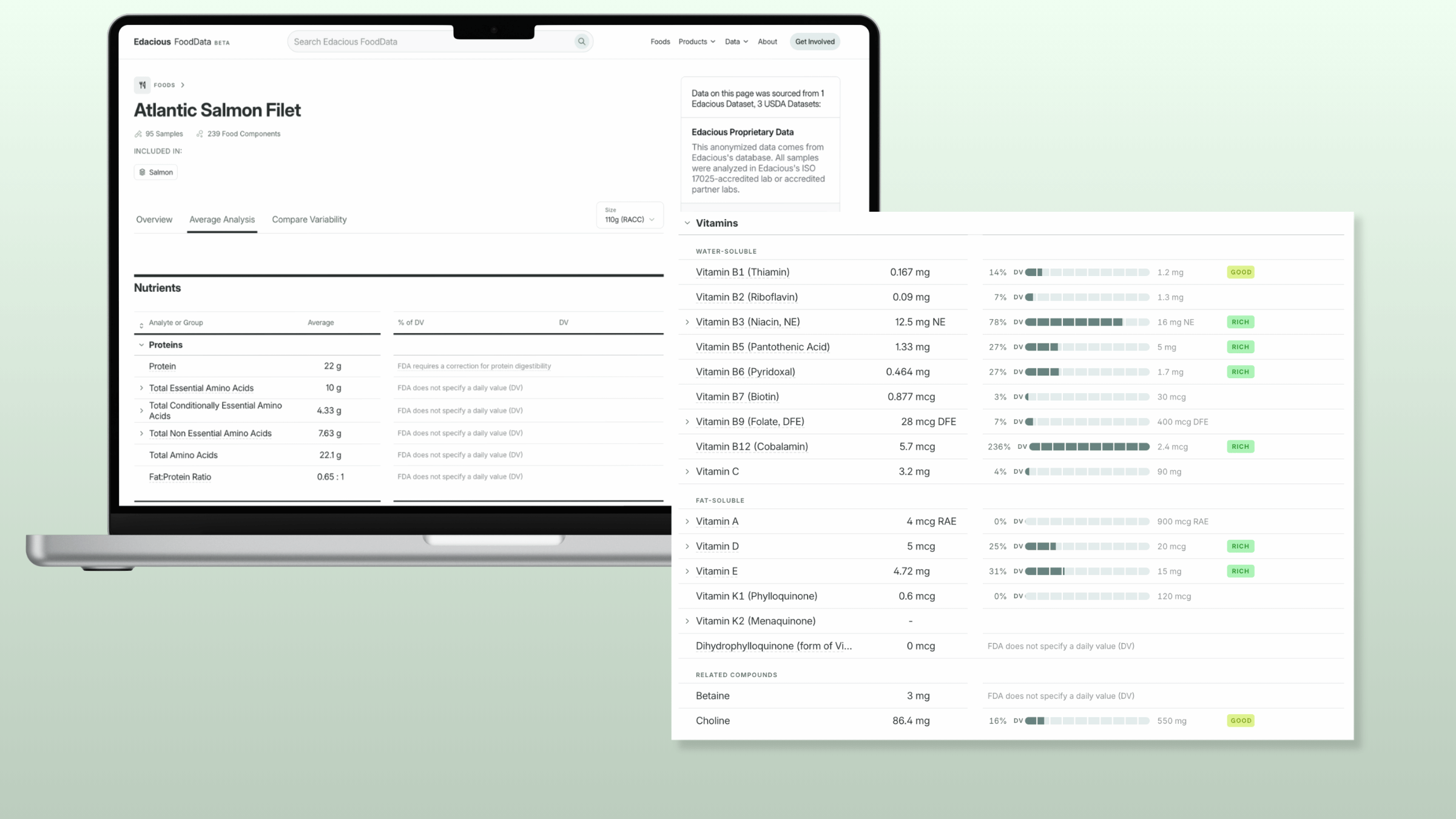
The salmon panels we looked at listed the required four, with vitamin D as the standout. On our Atlantic Salmon Filet page, the average serving was also rich in Vitamin B12 (Cobalamin) at 242% DV, Vitamin B3 (Niacin) at 81%, selenium at 36%, vitamin E at 32%, Vitamin B6 (Pyridoxine) at 28%, Vitamin B5 (Pantothenic Acid) at 27%, and phosphorus at 22%. Retail copy sometimes mentions B12 and omega-3s, but seldom mentions niacin, selenium, or vitamin E.
B vitamins in bok choy
Samples we tested from a single farm qualified for nine vitamin and mineral claims, including rich sources of Vitamin B2 (Riboflavin) and Vitamin B7 (Biotin). Few people think of bok choy for its B vitamins. As raw produce, it often carries no panel to share that value with consumers.
Zinc, B12, and niacin in ground beef
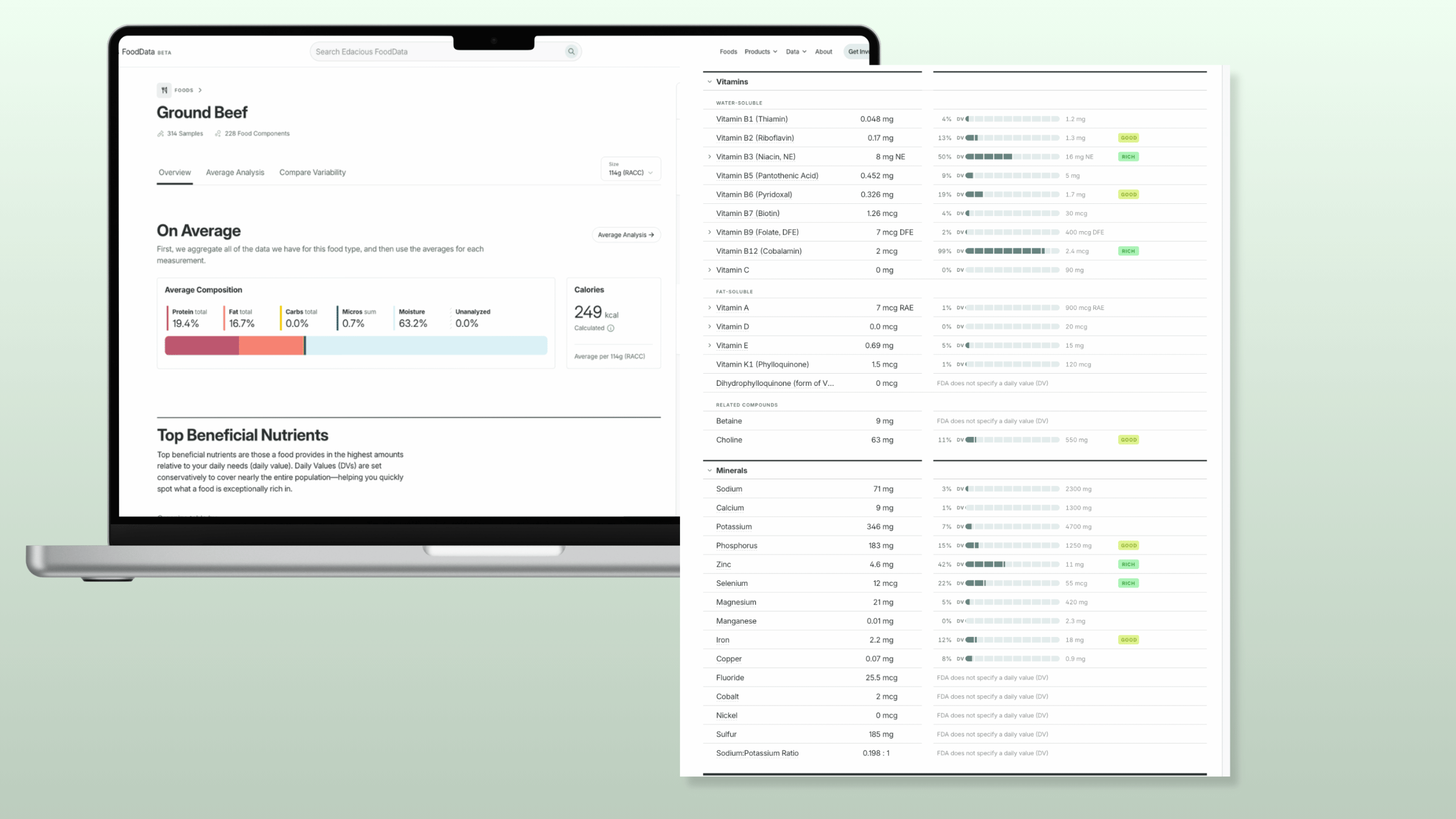
Ground beef gets judged on protein and fat. Our Ground Beef page shows what else it carries. For zinc, the middle 90% of 281 samples fell between 31.7% and 54.8% DV, so nearly every sample cleared the rich line. Vitamin B12 (Cobalamin) ranged from 71.9% to 145.4% DV across 49 samples. Vitamin B3 (Niacin) ranged from 34.1% to 60.7% DV across 20 samples.
Why does it matter what the label leaves off?
It matters because most Americans fall short on several of the nutrients the label leaves off. At the same time, Americans spent $72.88 billion on supplements in 2025, up 5.5% from the year before. People are paying for vitamins and minerals in pill form, while the ones already in whole foods go unmeasured and unnamed.
For brands and producers, that is value left on the shelf. A salmon rich in selenium and vitamin E, or a bok choy rich in B vitamins, cannot say so without data. For shoppers, it means judging a food's quality without the information to do it. Reading the label closely only goes so far when it covers four of more than two dozen vitamins and minerals. Without data, knowing what a food delivers takes a nutrition degree.
Innova expects proof to matter more in 2027, and verified data is how brands deliver it and consumers trust it.
How can brands show the vitamins and minerals their food carries?
Brands show the vitamins and minerals their food carries by testing it, well past the required four. Edacious analyzes up to 80 analytes per product. Our Claims Guide then shows every FDA nutrient content claim a product qualifies for, based on its serving size and results.
Over the next few weeks, we'll dig further into micronutrient quality and look at why the same food can carry very different vitamins from one farm to the next, how prep and processing change what reaches the plate, and why mineral balance and absorption matter as much as totals.
Want to know what your product carries beyond ‘the short list’? Talk to our team.
The Micronutrient Quality Series examines how vitamins and minerals show up in real food and why totals alone can mislead. We explore bioavailability, ratios, and variability to help interpret micronutrient data more responsibly.