.png)
Regenerative organic agriculture is usually discussed in terms of what it does for the land and farmers. Today, shoppers are asking a different question: is this food better for me?
In September 2025, Edacious and the Regenerative Organic Alliance began a four-year partnership to answer that with data. One year in, more than a dozen brands with at least one Regenerative Organic Certified® (ROC™) product have teamed up with Edacious for testing and translation, spanning more than 50 products in total.
At the time of this report, 13 brands had completed testing and agreed to publish their third-party results for ROC™ products spanning grains and legumes, meat, snacks, oils, produce, and eggs. The 2026 Regenerative Organic Nutrition Report brings those results together, making it one of the largest cross-brand collections of regenerative organic nutrition testing published to date.

Every product was tested in our ISO/IEC 17025:2017-accredited lab, across dozens of nutrients, and compared with USDA reference data. Here's some of what we're seeing.
What year-one testing of ROC™ products found
Omega-6 to omega-3 ratios came in consistently low in ROC meat.
Nearly every ROC meat product we tested, from ground beef to bison to sausage, landed between roughly 1-to-1 and 2.3-to-1. For context, published research puts conventional grain-fed ribeye around 8.3-to-1 and the typical U.S. diet around 16-to-1. A lower ratio is generally considered more favorable.
Selenium showed up where the USDA reference shows almost none.
Several ROC legumes qualified as a rich source of selenium, and in SIMPLi's black lentils, a single serving met more than the full daily value. The relevant USDA reference shows only a trace. Selenium in plants tracks closely with what's available in the soil, which makes this a pattern worth watching. It's concentrated in one brand's testing so far, so we'll be looking for it as more data comes in.
Some products stacked up claim after claim.
SIMPLi's White Quinoa and Green Lentils each qualified for eleven FDA nutrient source claims. Zego's Old Fashioned Rolled Regenerative Oatmeal qualified for nine. Clearing that many thresholds at once is a stronger signal of broad nutrient density than any single standout number.
What this report is, and isn't
The report covers early, favorable findings from a limited number of samples per product. The report isn't a peer-reviewed study, and it doesn't claim regenerative organic outperforms conventional across the board, or that certification itself causes any particular result. A food's nutrient profile reflects genetics, growing environment, and management practices together, and separating those effects takes controlled studies. That's part of what comes next.
Why brands chose to publish their results
Every brand in this report could have kept its results private, but they put them on the record instead. As Eric J. Smith, Edacious's founder and CEO, puts it: "Brands that can point to third-party testing are building something harder to copy than a label: real trust."
Read the full 2026 Regenerative Organic Nutrition Report
The full report includes category findings, brand portfolio results, product spotlights, and methodology.
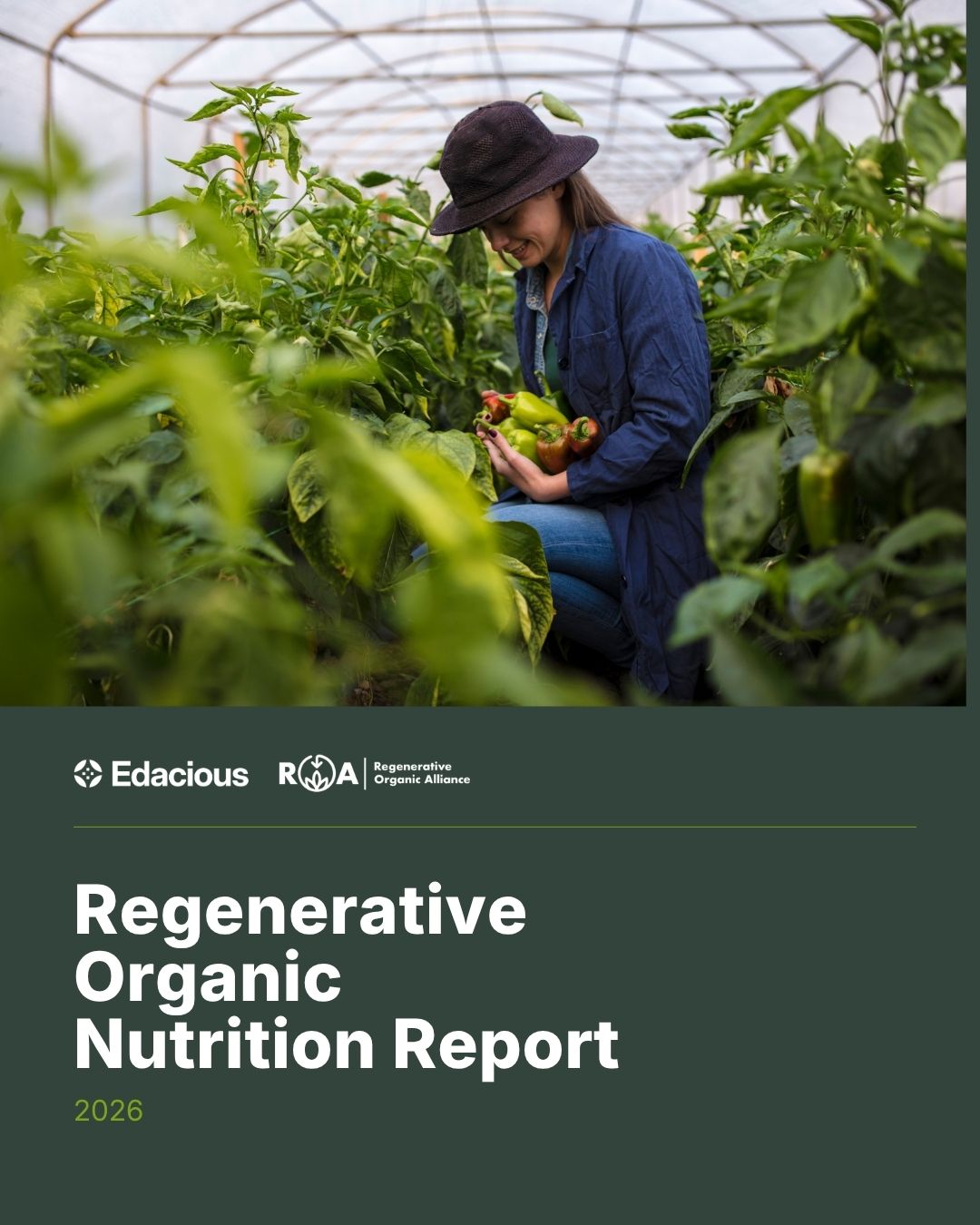
Download the 2026 Regenerative Organic Nutrition Report
Are you a ROC brand and want to understand what your investment in regenerative organic means for food quality? Get started →
Edacious proudly works with producers and brands across various food types, production methods, and certifications. If you want to better understand the nutrition and safety of your food and what verified data can unlock for you, we’d love to hear from you.
Published product pages for participating brands can be found on Edacious FoodData. Any products listed as “coming soon” in the report are in the final verification stages and will publish their full results soon. Four additional brand partners with ROC products are in active stages of testing and may have their results reflected in future reports.
.png)