


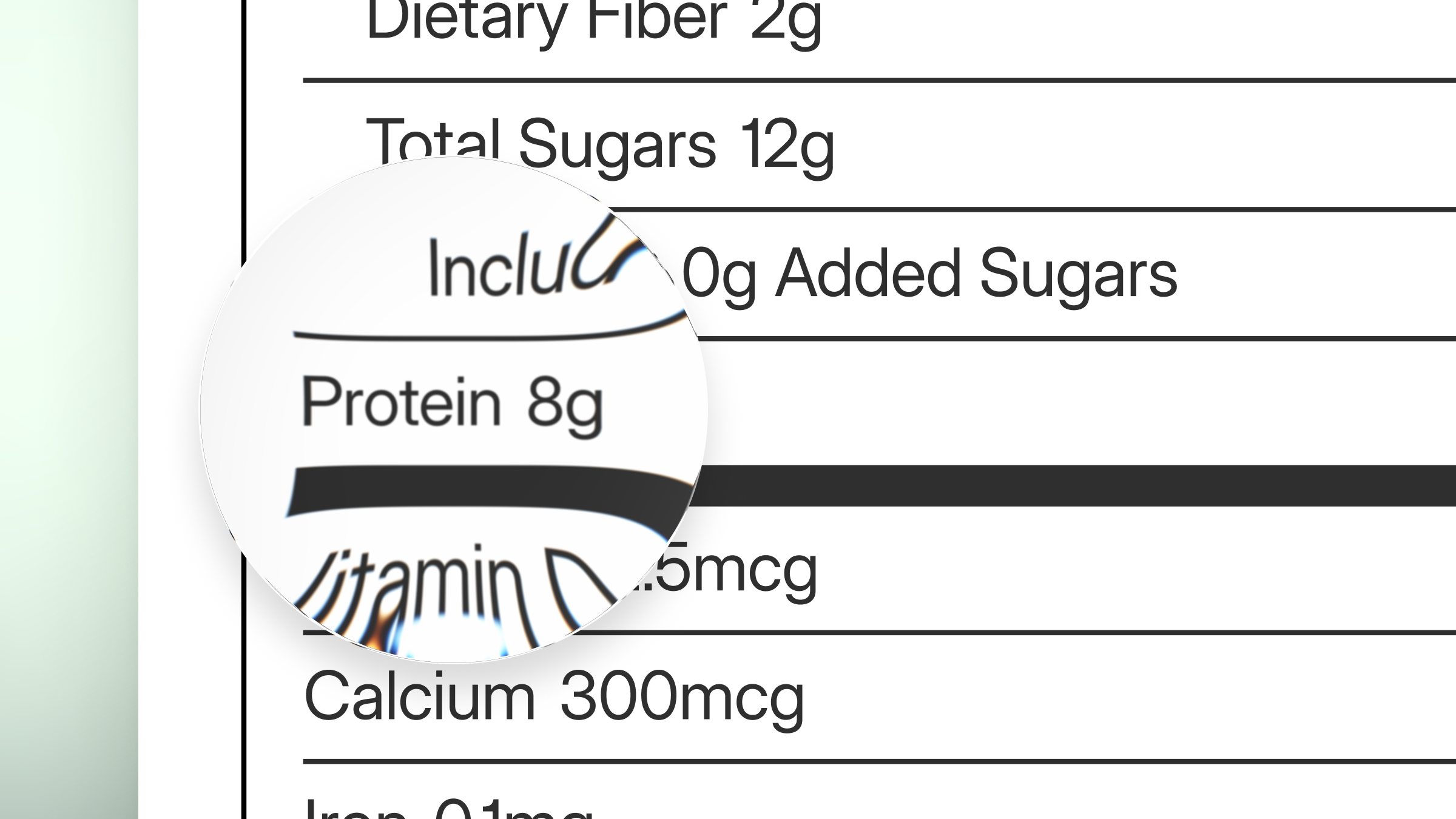
When consumers look at the Nutrition Facts panel, they usually see a single number: protein (g). But that number tells only part of the story. Two products can both list 6 grams of protein per serving and still deliver very different nutritional value.
Why? Because not all proteins are equally usable by the body.
Protein quality depends on two critical factors:
- Amino acid profile — Does the protein contain the essential amino acids in the right proportions?
- Digestibility — How efficiently can the body break down and absorb that protein?
To combine these factors into a single measure, scientists use the Protein Digestibility-Corrected Amino Acid Score (PDCAAS). PDCAAS is the FDA-recognized method for adjusting total protein when calculating % Daily Value (%DV) and supporting protein content claims. It adjusts total protein by both amino acid balance and digestibility to estimate how much usable protein a serving provides.
Where Total Protein Falls Short
Total protein measures quantity — not quality. Two foods with identical protein grams can provide meaningfully different amounts of usable protein once digestibility and amino acid balance are considered.
For example, a food might have:
- 6 g total protein
- PDCAAS of 0.45
- → 2.7 g quality-adjusted protein
This adjusted value is what must be used to calculate % Daily Value (%DV) and determine eligibility for claims like “good source” or “excellent source” of protein. A product may appear to qualify for a protein claim based on total grams alone, but fall below claim thresholds once PDCAAS is applied.
This doesn’t mean these foods are “low quality.” It simply means that protein type, structure, and digestibility influence nutritional value, not just quantity.
Why This Matters for Brands and Producers
As more brands seek to highlight protein content, understanding quality-adjusted protein is essential for:
- Accurate and defensible claims
- Regulatory alignement
- Transparency with consumers
- Differentiation when processing or fermentation improves protein quality
Under FDA guidance, protein must be adjusted using PDCAAS when calculating %DV and supporting protein content claims. Total protein grams alone are not sufficient.
In addition to regulatory oversight, protein claims have recently been the subject of private litigation. Several lawsuits have challenged whether products appropriately adjusted protein for digestibility when making nutrient content claims. Even in the absence of a federal audit, brands may be legally vulnerable if protein %DV and claims are not calculated using compliant methodology.
For producers using fermentation, sprouting, or other transformations, digestibility and amino acid balance can improve, sometimes significantly. In these cases, PDCAAS is not just a compliance requirement, it can become a differentiator. Processing can also reduce digestibility, making measurement equally important for risk mitigation.
The Bottom Line
Total protein tells you how much protein is present.
PDCAAS tells you how well the body can use it.
Both numbers matter, but only one determines claim eligibility and reflects biological usability.
If you’re navigating protein claims or wondering whether your processing steps meaningfully affect protein quality, incorporating PDCAAS into your evaluation provides a more complete — and more defensible — nutritional assessment.
The Protein Quality Series examines how protein quality is measured in real food — beyond total grams and marketing claims. We explore amino acid balance, digestibility, PDCAAS, and regulatory thresholds to clarify how usable protein is calculated, qualified, and communicated. Because when it comes to protein, quantity alone is not the full story.
.png)
.png)

