


How Home Place Pastures Got USDA FSIS Label Approval and Verified the Nutritional Value of Their Grass-Fed Beef


For regenerative beef producers expanding into retail, getting a USDA FSIS-compliant nutrition label isn't just a regulatory hurdle, it's an opportunity to put verified nutrient data in front of every buyer and consumer who picks up the package.
What sets Home Place Pastures’ beef apart starts long before the product reaches a package. It begins on their Mississippi pastures, where management is intentional, grazing is planned, and the team is guided by a deep sense of responsibility for the land and the animals they raise.
Customers noticed the flavor. Restaurants praised the consistency. But when the time came to expand their retail presence, the team realized they needed something more than reputation. They needed a label that reflected the true nutritional value of their product and met every requirement of the USDA FSIS.
That’s when they reached out to Edacious.
Nutrient Testing for Grass-Fed Beef: What the Analysis Revealed
The team at Home Place Pastures came to Edacious looking to understand the nutritional profile of what their beef actually looks like, and how that information can be presented in a clear, reliable way.
Edacious tested multiple samples across key nutrient categories, analyzing fatty acids, vitamins, minerals, and the omega balance that can signal both animal health and feed quality. Testing confirmed a favorable omega-6 to omega-3 ratio well below the standard beef average, B12 levels reflecting 140% daily value, zinc at 40% daily value, and consistently strong readings across B2, B3, and iron. While the team had long suspected the data would reveal strengths, these kinds of specific, defensible numbers can now hold up on a label and in a sales conversation, were it matters most.
For Home Place Pastures, the nutrient analysis put words to what they had always sensed about their beef. It gave them a way to show the value behind their work; however, turning that into a clear label is something else entirely.
USDA FSIS Label Compliance: From Lab Results to Approved Packaging
Taking those results and shaping them into a compliant, consumer-facing panel required the next phase of the work. Edacious collaborated with the team to update nutrient listings, adjust serving sizes, and determine which values were required, which could be highlighted, and which needed careful handling under federal labeling rules.
Together, they expanded the Nutrition Facts Panel to reflect what the beef actually delivers. Where the original label left key nutrients off entirely, the updated panel added verified values for B2, B3, B12, zinc, iron, and potassium — each tied directly to lab results and formatted to the required 4 oz serving size.
For a brand built on transparency, the difference wasn't cosmetic. It was the gap between what the product claimed and what it could now prove. Home Place Pastures could now ensure that what ended up on the package was both scientifically accurate and legally sound.

A Label That Tells the Full Story: Verified Nutrition Claims on Retail Beef Packaging
When the updated label was ready, it carried more than numbers. It carried the values behind the beef: the care, the management, the commitment to doing things the right way. It gave Home Place Pastures a clearer foundation for retail growth and a way to communicate nutrient density without over-claiming.
In a marketplace crowded with claims and marketing language, Home Place Pastures now stands on firmer ground: verified nutritional data, matched with compliant, consumer-ready labeling that reflects exactly what their products deliver.
It’s the kind of clarity that doesn’t just support a label. It supports a brand.
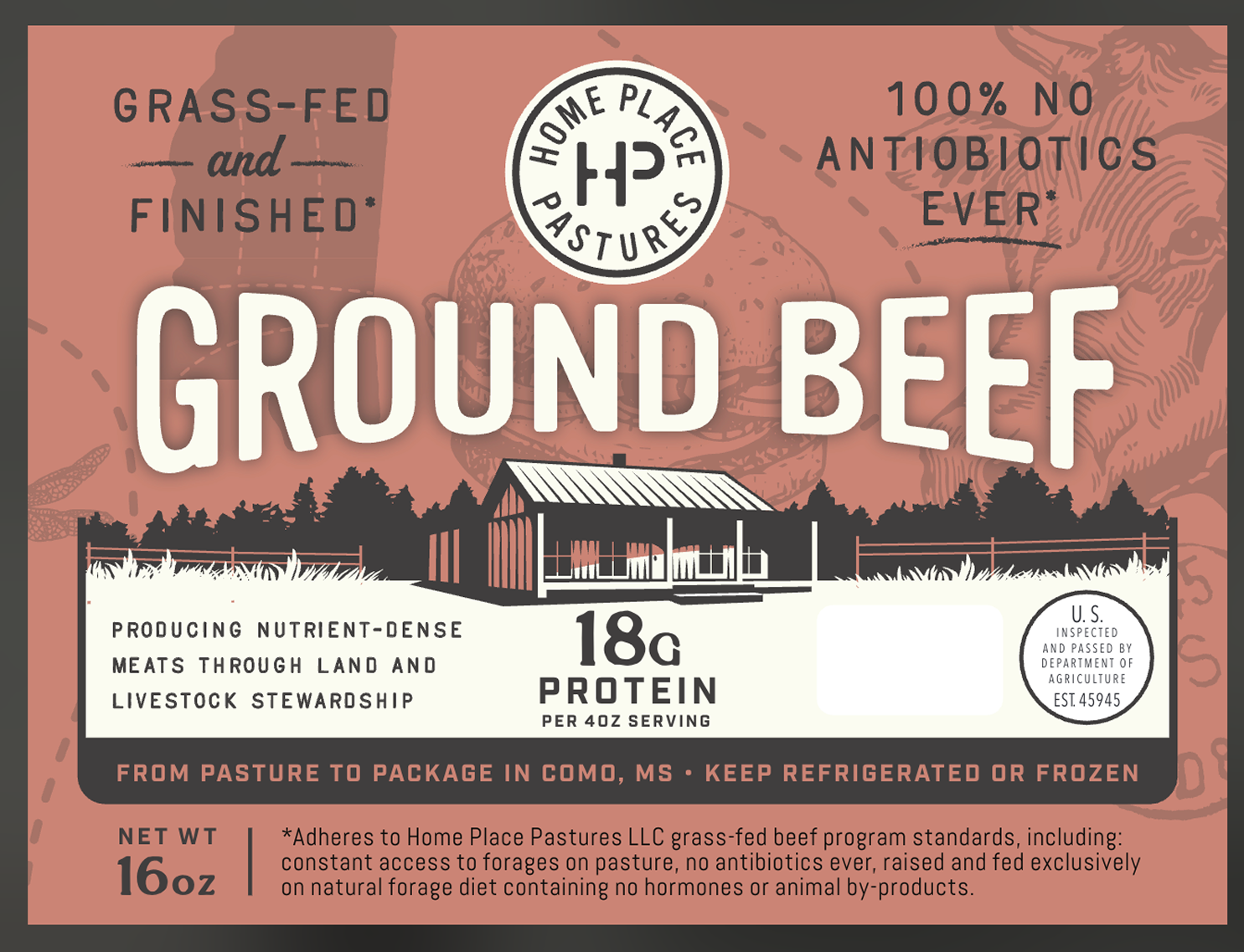
If you're a regenerative meat producer preparing for retail expansion, Edacious supports the full process, from nutrient testing through FSIS-ready label submission.
.png)
.jpg)

