Across the food industry, a quiet credibility crisis is taking shape. More brands than ever are introducing their own quality icons, sourcing commitments, and self-defined standards. Each one promising something meaningful, but few are backed by data that can withstand scrutiny.
Some of these efforts are well-intentioned. But intent and evidence are not the same thing. And, in a market where litigation is rising, retailer scrutiny is tightening, and consumers have grown increasingly skeptical of claims they cannot verify, a self-made standard without the data to support it is as much a liability as it is an asset.
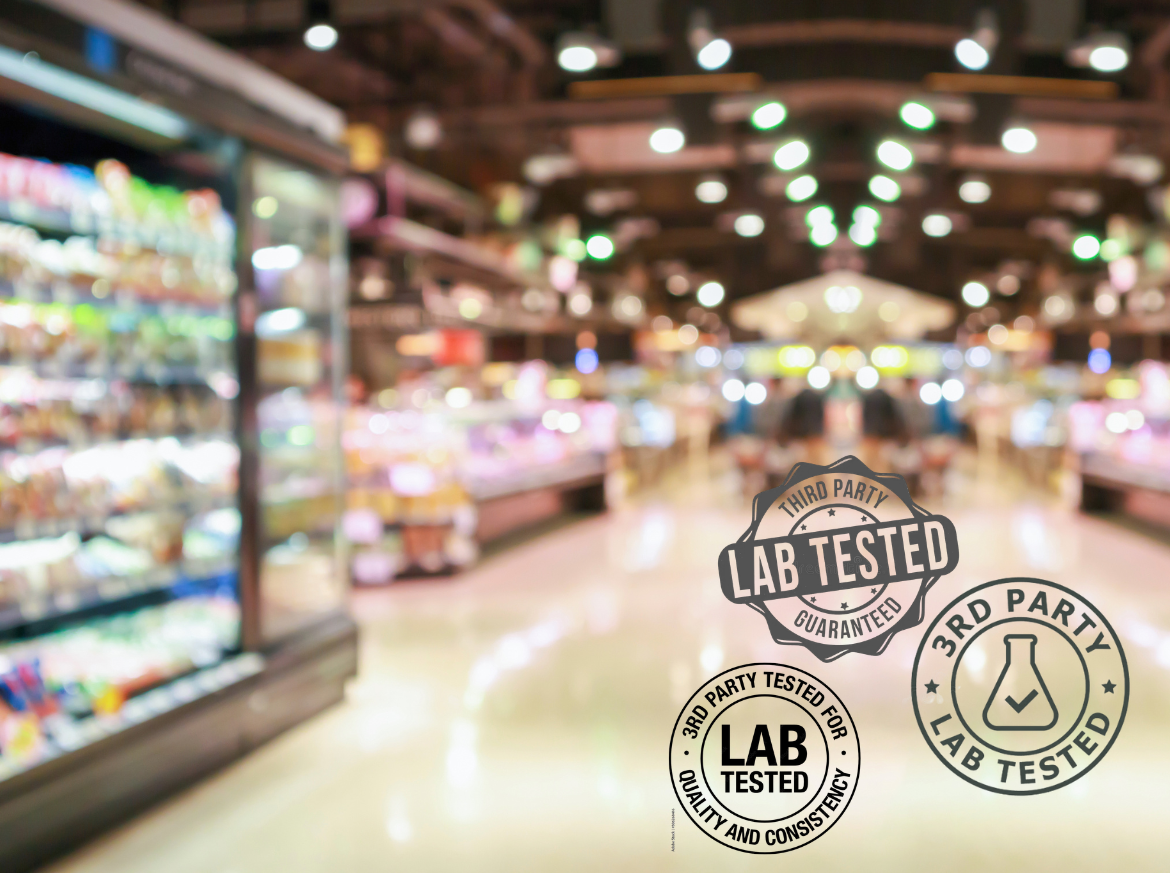
If you've seen icons like these on food packages and product websites and not questioned "tested for what?", "how often?", "can I trust the lab?" etc., we invite you to do so! Not as an invitation to introduce mis-trust in a food system that is already hard to navigate, but instead to ensure that food transparency and trust is built on integrity and proof.
The brands building something durable are approaching this differently. They are testing first and claiming second. They are treating verified nutritional data not as a marketing layer but as the foundation their story is built on. With validation and integrity that holds up when challenged, in a conversation with a buyer, in a regulatory review, or in a courtroom.
This shift is not about adding more steps and complexity. It’s about doing the necessary things, in the right order, with the right partner. Verification is not a nice-to-have at the end of a product story. Increasingly, it is the foundation to build upon.
The future of food is one where quality is not claimed. It’s proven.
LEARN MORE ABOUT HOW EDACIOUS SUPPORTS VERIFIED CLAIMS →
This article was originally featured in The Translation, Edacious's newsletter covering verified nutrition data, food quality research, and the people building a more measurable food system. Sign up to get future issues.